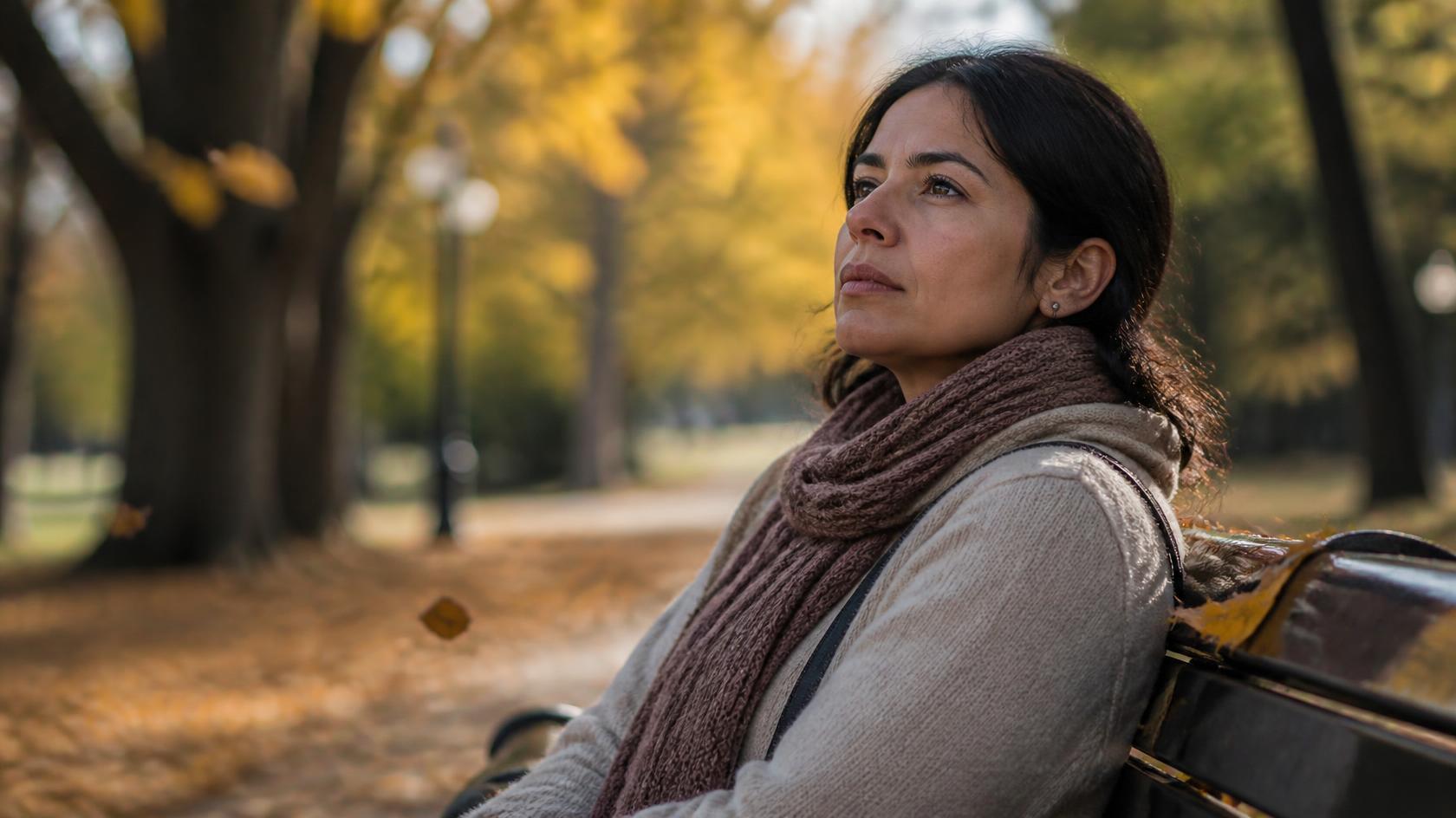
For twelve years, Karen* has visited her mother every Sunday. Her mother has advanced dementia. She does not recognize Karen anymore. She has not, in any consistent way, for the last three years. The visits are not conversations. They are Karen sitting with her mother, holding her hand, reading aloud from books her mother once loved, watching for the moments when something passes across her mother’s face that Karen recognizes.
Karen’s mother is very much still alive, and Karen has been grieving her for a decade.
If you recognize yourself in Karen’s story, you are inside one of the most difficult and least understood forms of grief. Clinicians call it ambiguous loss, and there is no ritual for it.
What ambiguous loss is.
Ambiguous loss is a term developed by researcher, educator, and family therapist Dr. Pauline Boss to describe the specific kind of grief that occurs when someone is physically or psychologically present but no longer accessible in the way they used to be.
We recognize it in several of its forms: a parent with dementia, a family member with a chronic mental health condition that has changed from who they once were, an adult child who has cut contact, a spouse whose consciousness has changed after a stroke or a brain injury, a sibling who has become someone you no longer recognize because of addiction, or ideology, or the accumulated emotional distance over years.
The specific quality of ambiguous loss is that the person is there. You can call them. You can visit them. In some cases you can still hug them. But the person as you knew them is gone, has become someone else, or is only intermittently reachable. You are grieving someone who has not physically died.
That is a different kind of grief than the grief of a death, and, in some clinically important ways, it is harder to process.
Why it is harder than a death.
There is no ritual for ambiguous loss. When someone dies, there is a funeral, a defined period of mourning, and cultural permission to grieve. Friends bring food to the house. Employers grant leave. Even people who have not lost anyone know, roughly, how to respond.
Ambiguous loss has none of that. You are grieving someone who is technically still available, and the culture does not have language for it. You are not a widow. You are not orphaned. You are something the language does not have a word for, and that lack of a word is part of the isolation.
There is no closure. Grief that follows a death moves through defined phases, albeit imperfectly, over time. Ambiguous loss does not. The person may still change. The relationship may still shift. You cannot fully grieve because the loss is not fully complete. You are held in a middle place, indefinitely, with no clear direction to move.
There is no permission. Because the person is still alive, you may feel that you do not have the right to grieve. You may feel guilty for the moments when you wish the situation would resolve. You may feel that other people who have lost someone to death would think you are complaining. That layer of guilt on top of the grief compounds it.
What it looks like clinically.
People carrying ambiguous loss often present in clinical work with what looks like depression, chronic fatigue, or a general sense of stuckness. They report going through the motions of their life without being able to name what has been draining them. They often have not identified the loss they are carrying as a loss, because the person is still alive and they feel they should be functioning better.
The first move in the work is often just naming it. Recognizing that what you are carrying is grief, and that the grief has a shape and a name, is itself clinically significant. It doesn’t solve it, but it changes the relationship you have to it.
The second move is holding two truths at once. You are grieving the person as they were, and you are also in relationship with the person as they are. Both of those are real. Neither cancels the other. Karen is grieving the mother who used to know her name. She is also spending Sundays with the mother who exists now. She does not have to choose between those.
The third move is redefining what the relationship is for. If you cannot have the relationship you used to have, and the relationship you have now is not the same one, what is the relationship for? Karen has come to understand that the Sundays are not about her mother recognizing her. They are about Karen being the daughter who shows up regardless. That reframe does not remove the grief. It gives the grief a container.
What it does not look like.
Ambiguous loss is not fixed by closure. It cannot be, because the situation does not resolve. The parent with dementia does not get better. The estranged sibling may never return. The waiting for closure is often part of what makes ambiguous loss so exhausting. Learning to grieve without closure, to hold the loss as ongoing rather than as something to move past, is a specific and slow piece of clinical work.
It is also not fixed by acceptance in the way self-help culture describes acceptance. Acceptance, in ambiguous loss, is making peace with the fact that the situation is not something you will make peace with and continuing to live inside it anyway.
A different way to hold it.
If you have been carrying an ambiguous loss privately (perhaps for years!) without a name for what you are carrying, that experience is real, and it is worth clinical attention. The work is not to move past the loss. Rather, to develop a relationship with it that lets you stay present in your own life while the loss continues to move.
That work often begins with someone else naming it for you, and helping you see the shape of what you have been quietly holding. If you recognize yourself in Karen’s story, and you are ready to give the grief a name and a container, I can help you find one. Reach out directly at (702) 575-4723 to schedule an introductory call.
*Karen is a fictional composite character created for illustrative purposes. She does not represent any specific individual or client. The content of this post is strictly for educational purposes and is not a substitute for clinical or legal guidance.
